One Word, Many Dancefloors: Why 'Eastern' Needs a Rewrite on UK Club Flyers
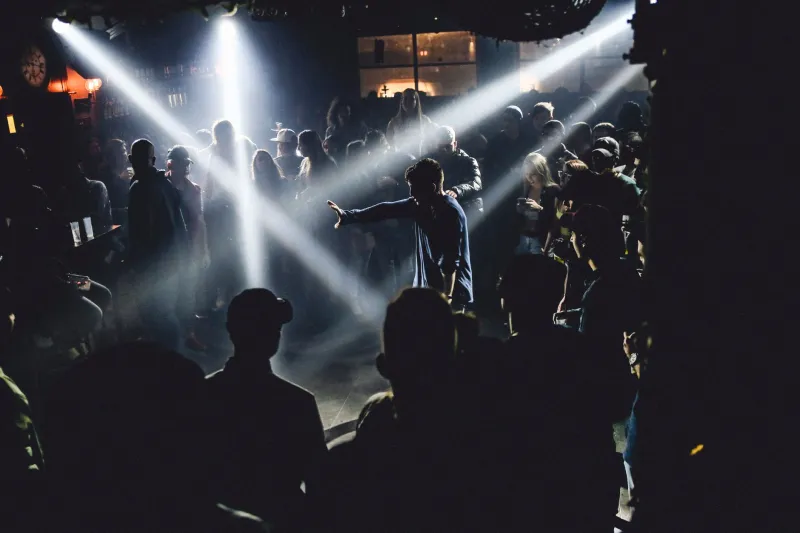
On a Saturday in 2026, a flyer can promise an 'eastern' night and mean almost anything. It might be Persian house and Turkish psych. It might be bhangra edits, Arabic pop, dabke, UK garage with a South Asian vocal, or a DJ set built on Cairo wedding tapes. The word is useful at the door. It is also doing far too much work. That is the debate now shaping UK club curation: not whether eastern-inspired nights belong on the calendar, but who gets to decide what the label covers.
A compass is not a genre
Eastern is not a genre. It is a direction on a map, and maps are blunt instruments when you are trying to describe a bassline. The UK has one of the most tangled, brilliant and specific nightlife conversations in Europe, built on Caribbean sound systems, South Asian diaspora parties, Arabic club nights, African promoters, queer raves and everything that happens when those worlds share a smoking area. Folding all of that into 'eastern' can feel efficient. It can also feel like a marketing shortcut that erases the very detail that makes a night worth leaving the house for.
The risk is not that promoters use shorthand. The risk is that shorthand becomes the whole story. When a flyer bundles Moroccan gnawa, Lebanese dabke, Punjabi folk and Bangladeshi diaspora club music into one vague promise, audiences lose the thread and artists lose context. Worse, it can make different scenes look interchangeable when they are not. A night in Birmingham's Digbeth is not the same as a night in Peckham, and a Cairo-style wedding set is not a substitute for a London Punjabi underground party. Audiences are sharper than some marketing assumes. They notice when a lineup has been built with care and when a word has been used to avoid the harder work of description.
The curation test: who is in the room?
The promoters getting this right in 2026 tend to start with sound and community, then reach for the umbrella term. In London, nights such as Ruh Nights have built a following by pairing Arabic and North African club sounds with clear lineups and a strong visual identity — not just a camel silhouette and a load of gold type. In Manchester, collectives like Saffron Sound System are testing a similar idea with South Asian dance music, pulling in bhangra, garage, drum and bass and diasporic pop without pretending they are all the same thing. In Birmingham, Desi After Dark has made the smart move of naming the tradition and the city in the same breath, so the night feels rooted rather than imported.
That is the curation test. Can you describe the night without using 'eastern' at all? If the answer is no, the programme probably needs more thought. If it is yes, the umbrella term can sit underneath as a welcome mat rather than a replacement for the real thing.
Naming without flattening
A practical framework for 2026 is not complicated, but it does require a bit of discipline.
First, name the sound before the region. 'Dabke, Arabic pop and bass' tells me more than 'eastern beats'. Second, use 'eastern-inspired' in the subtitle or blurb, not as the headline act. It is a useful signal for audiences who are curious, not a substitute for genres. Third, publish a lineup rationale. A sentence on why these artists share a bill is worth more than ten stock images of lanterns. Fourth, let artists describe themselves. Some will happily use 'eastern'; others will want 'SWANA', 'South Asian', 'Arabic', 'Persian' or something else entirely. Ask, and then use it.
Fifth, localise. A bazaar night in Manchester should sound like Manchester as well as the eastern Mediterranean. That might mean a local tea supplier, a Bolton-born DJ, a Desi punk band or a Somali-British host. Sixth, avoid the lazy visual grammar. Not every eastern-inspired night needs a hookah, a mosaic or a belly dancer. Sometimes a great poster is just good typography and a lineup. Finally, train the door and bar staff on the concept. If the team cannot explain the night, the crowd will fall back on the most obvious stereotypes.
What audiences can do
Clubbers have more power here than they sometimes realise. Ask questions in the group chat. Follow the curators, not just the headliners. If a night bills itself as 'eastern' and delivers three hours of generic edits, say so online. If a promoter has clearly done the work, turn up early, buy a ticket rather than relying on guest list, and tell your mates why it mattered. The scene gets better when the audience treats curation as part of the night out, not just the bit before it.
The 2026 line
Eastern can be a useful word. It can also be a lazy one. The difference is whether it is an invitation to explore or a verdict on everything between Marrakech and Manila. In 2026, UK promoters have a chance to be more specific, more local and more interesting than the label they inherited. The best nights will not be the ones that shout 'eastern' the loudest. They will be the ones that tell you exactly what you are about to hear, who is playing it, and why it belongs together on a dancefloor in this country, this year.